Friday, June 30, 2006

Where Do Colors Come From?


In the world there is electromagnetic energy that varies in frequency and intensity but it is not “colored” frequency and intensity. Electromagnetic energy is colorless. When humans absorb vibrations in the range of 350 to 750 nanometers, we experience colors from blue to green to red. But that’s about us, not the world. There is no color in the world. There is no color in the brain. So where does the color come from?

Monday, June 26, 2006

What is Life?

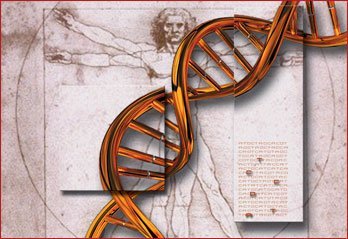
Usually life is defined as a certain a set of activities or processes, such as reproduction, metabolism, irritability. But it is not too difficult to come up with examples that meet each criterion and yet which are not alive, according to common sense. Crystals grow, for example. Fire “metabolizes” fuel, grows, and reproduces itself. Rivers are irritable, in that they try to get around rocks, dams, and other obstacles placed in their path.

Just having DNA is not good enough, since I don’t want to say that a test tube full of DNA is alive. Is a virus alive? Scientists aren’t sure. If it is alive, does it stay alive when you take it apart, or is there something special about the system of parts that confers aliveness. Are gametes alive (e.g., sperm and egg cells)? Spermatazoa certainly look alive, but they do not have full complement of DNA, and can’t reproduce.

At some point, one is forced into a corner, defining life simply as those things that are alive, and the definition is totally circular. That's no good.

I don’t think there is a special “life force,” but I think the question of life must be wrongly formulated somehow.

Image from:
http://stwww.weizmann.ac.il/g-chem/chemlife/imgs%5Cfrontpage.jpg

Monday, June 19, 2006

How Tall Can A Tree Get?

There are some very tall, old-growth fir trees near my house. Some of these trees are at least 4 feet (1.5 m) in diameter at their base and must be at least a hundred and fifty years old. Some of them tower 100 to 150 feet high (30-45 m), I would guess. How tall could they get, assuming they did not eventually succumb to disease or lightning? Is there any practical limit? One limiting factor is the difficulty of getting water up to the top to supply growth. Water is heavy. What does it take to lift water 150 feet or more in the air?

Water gets up the tree partly by capillary action, but also because it is sucked up by a sort of hydraulic vacuum. The needles transpire, giving off water, creating a negative pressure in the capillaries, which are completely closed pipes all the way down to the roots. The negative pressure at the needles literally sucks water out of the ground, right up to the top. That may not be exactly right, but that’s what I believe.

Still, even given that the water transport system is a water-tight vacuum pump, there must be some limit to how much vacuum fir needles can create at the top before they implode from negative pressure. Also, why wouldn’t all the lower down needles sap off the water and reduce the pressure long before the water ever got to the top?

There’s also a structural problem. Wood can only withstand so much compression before it splinters and splits. At some point the weight of the tree would simply crush the wood near the ground and the tree would collapse from its own weight. Why haven’t I ever heard of that happening?

So I just don’t know how tall a tree can get.

Saturday, June 10, 2006

What is the Purpose of the Retinal Image?


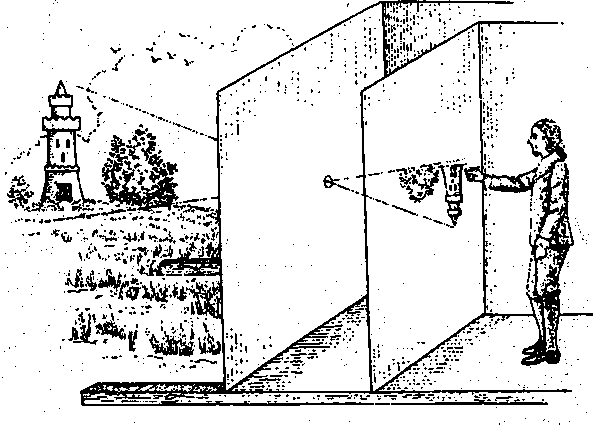
In some ways, the eye works like a camera obscura, as Kepler described in 1604. The lens of the eye forms an upside-down and backward, two-dimensional image of whatever you are looking at, on the concave inner back wall of the eye. A doctor can see your retinal image when she looks into your eye. But you can’t see your own retinal image, so what is the point of having it? And even if the retinal images were copied to the brain (which they are not), you still couldn’t see them. What are they for?

Friday, June 02, 2006

Where Do We Go at Night?

Once a day, I lie still in a specially darkened and quieted room, and wait to be taken away. I have covered myself in blankets to assist in thermoregulation in the hours ahead, just as an astronaut dons a space suit prior to an extra-vehicular adventure. And in twenty minutes, I am gone. Where, I do not know. Seven or eight hours later, I have returned, with only a few uninterpretable dream snapshots of where I have been. This happens every single day of my life. Why do I accept that as perfectly ordinary? It’s incredible! One third of my life is spent in some other world I know nothing about!

Monday, May 22, 2006

Are Armpits a Design Error?


Armpits sweat uncomfortably and often stink, unless you take measures to prevent that. Dogs have no armpits. But if you turn a four legged animal upright, and let the front legs hang down from the shoulders, you get armpits. A better design for human arms would be to have them stick straight out from the trunk, with an omnidirectional elbow, or at least have them hang down from cantilevered clavicles, away from the trunk. Even an octopus does not have armpits. The transition from four-legged to upright locomotion was not well-planned, with respect to armpits.

Friday, May 12, 2006

Mirrors


Why does a mirror reverse the image side to side but not top to bottom? If you hold a page of text up to a mirror, it is hard to read because the image is backward. But the top is still the top, and the bottom is still the bottom. Why is that?

Monday, May 08, 2006

The Size of the World

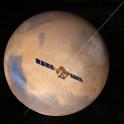
I was watching some documentary show about planetary exploration and I saw an image showing one of the Mars probes orbiting the planet. It looks like an aircraft coming in for a routine landing.

Mars is becoming familiar to us now. I imagine that in the future, after I'm gone, it will be very familiar. "Oh yes, we went to Mars Base Three on our vacation. You should go. Great food, interesting music."

And that, in turn, made me think about how small the world was for the ancient Greeks. For them, the whole world was the Mediterranean Sea. They had no idea what else was out there. The idea of north and south American continents was inconceivable. Their world was tiny but it was the big bad world as far as they were concerned. We look back on that and wonder, what would it be like to believe that the world was that small? It seems sort of comforting.

Now, our world is global. It is trivial to vacation in Rio, Bali, or Sydney. New Yorkers pop over to London for a meeting. People in Seattle go to Tokyo to see a friend. We visit family in Hong Kong, Cape Town, and Edinburgh. We don't yet think about casually going to Mars, but we will.

In the future, people will look back on our time and think, I wonder what it was like to live in such simple times, where you thought of your world as just one planet? That would have been so comforting.

Why Are there So Many Languages?

An acquaintance of mine speaks Xhosa, one of the click languages of South Africa. It is strange-sounding indeed. There are so many languages and they all seem so arbitrary. Imagine if people differed from each other in configuration of eyes and limbs, to the extent that Xhosa differs from English. It doesn’t seem reasonable that there should be so many mutually unintelligible languages when human beings are so much the same in so many other ways. Why can't we all understand each other?

Sunday, April 23, 2006

Astrology Today


Behavior genetics is the modern astrology. Both strive to assert extrinsic cause, meaning and purpose to human psychology. Both are wrong.

Monday, April 10, 2006

What Do We See?

Richard Feynman, Nobel laureate in physics, said that if our eyes were ten times more sensitive than they are, we would detect extremely dim light of one color as a series of intermittent flashes of equal intensity. That's remarkable! It follows from the fact that light is a particle, or at least a series of packages, not a "beam."

But I wonder if we would see the world with more sensitive eyes any differently. We would integrate the electromagnetic packages much as our minds make motion pictures out of a series of stills presented at 24 frames a second. The kind of animals we are, with the kind of bodies we have, and the kind of mind we have, requires that the physical world be made of solid objects, and that light from them be steady. So we would overlook discrepancies (as we do now with the blind spot, perspective effects, and constancies of color and size, for example).

Still, if we are so committed to seeing the world in a certain way, regardless of the stimulation of our sense receptors, then it makes you wonder if we really know anything about what's "out there."

Reference: Feynman, R. P. (1988). QED: The strange theory of light and matter. Princeton University Press.

Friday, March 31, 2006

The Airbag Car


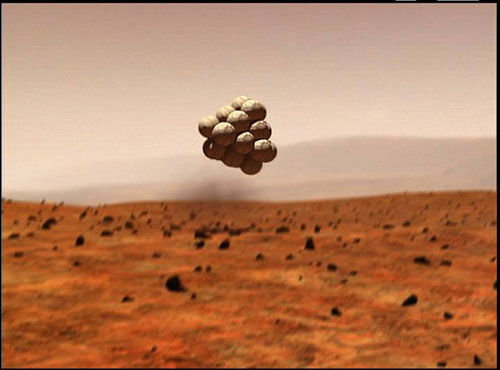
Why are cars still made of steel when airbags have been shown to be so effective? Why not make a car that is all airbag? The occupants would be surrounded by airbags instead of metal on all sides. We're moving that way anyhow with front and side airbags. Why not go all the way with the concept? Airbags inflated everywhere except the bottom and the front window. Forget the sheet metal entirely. It would be a very light vehicle and get high fuel economy. If you hit anything, or got hit, you would just bounce. It worked for the Mars explorer. It could work on the highway.

Thursday, March 30, 2006

How Big Is A Marble?

Scientists have announced that the universe grew from “the size of a marble” to “astronomical proportions” in a trillionth of a second after the big bang, 14 billion years ago. It is a deduction from examination of the cosmic radiation background, which is supposedly the afterglow of the big bang.

I can’t tell if the scientists who make such statements are just trying to “dumb down” the physics for popular consumption, or if they really are that dumb. Announcements like that are paradoxical and incomprehensible.

If the entire universe, everything that exists, was “the size of a marble,” what does that mean? A marble compared to what? Who would be looking at it?

Are we invited to imagine that we were floating outside the universe, (which is impossible, since the universe is everything), looking down on this cute little marble sized universe (again impossible), and we watch it explode to incomprehensible size in an incomprehensible instant?

Only God could exist outside the universe like that. So the scientists are saying, in effect, “Imagine you are God, beyond all that exists.” And I’m supposed to say, “Okay, no problem.” Because it is utter nonsense to imagine that a human being could have a point of view, even in imagination, beyond all that exists. How would we know what it's like to be God?

Also, after the explosion we have to change our mental image and get back inside the universe somehow, in order to avoid being stranded outside the expanded universe, a lonesome transcendent God instead of an existent human being.

Scientists who think they are describing reality with their equations have become blind to their own humanity, so they don’t see the irony in their Godlike pronouncements.
The big bang is a mathematical singularity, an artifact of the equations that physicists use. It’s like starting with a hundred jellybeans and each day eating one. As soon as you understand that process, you realize that a hundred days from now, you will have zero jellybeans. It’s a mathematical result, an artifact of the human mind. It does not mean that today’s jellybeans do not exist because in a hundred days they will be gone.

In the same way, running an equation backward in time instead of into the future, it is an error in reasoning to say that today’s universe was once the size of a marble.

Sunday, March 26, 2006

The Myth of Artificial Intelligence

Consider this analogy. You wind your watch (or put a battery in it), then it "keeps time." On it's own! Isn't that amazing? That's the entire rational basis for belief in AI. It is incredible that this simple- minded analogy supports an entire academic discipline. Many scientists seriously believe that if you store some instructions for action in a machine, then step back and watch those instructions execute later, that you are witnessing artificial intelligence.

For years I believed it might be possible to create genuine intelligence in a computer. I learned to program computers and worked on the problem for twenty years. Finally I realized that the problem is badly formulated. We need to define "intelligence" before we can hope to synthesize it. I have a definition of intelligence now, and unfortunately, it makes it impossible to synthesize intelligence. The essence of intelligence is a self-relating existence. It is to exist in a way that takes its own existence into account. A stone does not do that. Any animal does.

Thursday, March 23, 2006

Orgasms

What if orgasms were not pleasurable? The physiology would work exactly as it does now, so there would be no biological barrier to reproduction. But it just wouldn't be pleasurable. Would that make any difference?

It shouldn't, if you take a biological view of human nature. Pleasure (and pain) are mental, psychological experiences. As such, they are not necessary to human life or human evolution. The body and its genes do whatever they need to do, regardless of what the animal thinks about anything.

Taking a psychological point of view though, if orgasms gave no pleasure, that might have unexpected effects on human life. Sex would be about just getting those eggs fertilized, just another bodily chore, like brushing your teeth. I wonder if the population growth of our species would have followed the same trend. There would be no contraception-- no need for it. Would there be marriage?

Masturbation would never occur, of course, since there would be no reason for it. Would there be pornography? The mystery of bodies would still be interesting, so it might. It might affect men and women differently. But without the pleasure of orgasm, I don't think the society would put any social taboo on bodies, so nudity would be ordinary, routine, not forbidden. There is something about pleasure that makes people worry, not nudity itself. I don't think sex is what they want to regulate, but pleasure.

Would romantic love actually be more interesting if orgasms gave no pleasure? Without the motivation of orgasm, people might find each other more interesting, in more subtle ways.

Somebody should do a sci-fi story on this idea.

Tuesday, March 21, 2006

Two Evils of Photography


Still photography is especially evil. I haven't thought enough about video yet, but I think the same applies. And I mean especially, pictures of people. Here's what's wrong:

1. Pictures show stasis, when reality is process.

2. Pictures show the outside when reality is the inside.

We tend to believe that the camera doesn't lie. But it does. Not with trick photography, but simply because it objectifies human experience. We don't think much about it now, since images of people are omnipresent. But prior to the 19th century, when there were no cameras, people might have thought differently about themselves, others, and life.

Modern, chronic self-objectification is why we cannot understand the cave paintings in Europe. And why we are mystified that there are no human representations on them. Something has happened to the human psyche since then. We used to experience life but now we would rather look at it, and even look at ourselves looking at it. There is nothing left on the inside.

The God of Mars


THE MARTIAN HORIZON

Here is a picture of the Martian Horizon, taken from its surface. It gives me an eerie feeling. Why?

The eerie feeling is a holdover from traditional thinking that the heavens are home to the gods. We know better, but for millennia the heavens have “looked down” upon us. Now we look out from the heavens across a Martian horizon. It's a radical shift in world view.

ARE WE ALONE?

The Mars mission is motivated in part by the search to find extraterrestrial life, or at least water, which would increase the probability that there is, or was, life on Mars. Some interviewer on NPR, asked a scientist, “Why does that matter?”

The scientist answered, “One of the greatest questions we can ask is, Are we alone?”

Finding life on Mars would instantly create a “them.” The discovery would not lead to a great insight, but rather, to a familiar pattern of human psychology: Us and Them. "We" would not be alone, because "they" were there. It would group all humanity in the most superficial sense, as "us." We would probably kill "them," because that has always been our history, our way, as a species.

A SNAPSHOT OF GOD?

I think what makes the question, “Are we alone” seem more important than it is, is a tacit logic: We believe God created life here on Earth, and presumably, life on Mars did not get there from here, so if there is life on Mars, we could conclude that God created it there too.

Therefore what?

It would mean that we living things here on Earth are not “special.” Would that be big news? It sounds like a child coming to realize that its parents have other interests. It's a childish idea.

I think what really captures people’s imagination in the question is a muddled theological argument. Millions of people watching the pictures come back from Mars will be looking not for information about Mars, but for a candid snapshot of God. Scientists themselves, it seems, are not immune from that vestigial wish.